Articulation Disorders: The Essentials
What is an Articulation Disorder?
Children with articulation disorders can be known to do one or more of the following...- delete sounds (child says: /bu/ instead of /bus/)
- substitute sounds (child says: /sree/ instead of /three/)
- add sounds (child says: /spagbetti/ instead of /spaghetti/
- distort sounds (child says: /thpoon/ instead of /spoon/
Individual sounds develop by certain ages. If a sound isn't developed by the expected age, the child could have an articulation disorder.
Explore Our Goal Reaching, Client Centered Products
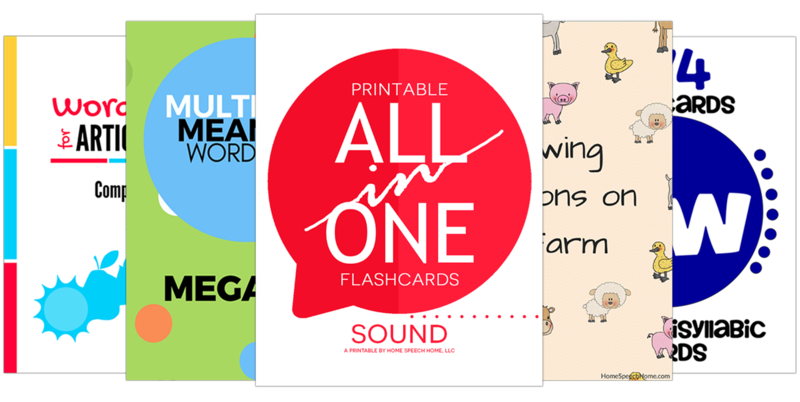
By the following ages, children should be able to say the corresponding sounds.
3 yrs
h
w
m
n
b
p
f
4 yrs
d
t
k
g
y
ng
6 yrs
At this age a child may still have errors on the r, s, z and th sounds, but they should be developing.
l
v
sh
ch
j
8-9 yrs
A child should be able to say ALL sounds correctly including:
r
s
z
th (thin
TH (that)
Adapted from:
¹Pena-Brooks, Adriana, & Hegde, M.N. (2000). Assessment and treatment of articulation and phonological disorders in children. Austin, TX, U.S.A.: PRO-ED, Inc.
SEE ALSO: 5 Articulation Games Using Everyday Objects
What is Articulation?
Articulation is the movement of mouth muscles and articulators...- lips
- tongue
- teeth
- jaw
- velum - or soft palate, rear part of the roof of your mouth
- hard palate - or roof of your mouth
- alveolar ridge - bumpy portion behind your top front teeth
It is one of four processes needed for speech production.
When air comes up from the lungs the mouth muscles move and the articulators change positions. This interrupts normal airflow and makes different sounds.
What Causes It?
The truth is, Speech-Language Pathologists don't know exactly what causes articulation disorders.We do know that some speech errors are caused by:
- Hearing loss - children with frequent ear infections are at higher risk.
- Illness
- Developmental disorders (ex. autism)
- Neurological disorders (ex. cerebral palsy)
- Genetic syndromes (ex. Down syndrome)
Additionally, physical differences in the mouth can but don't always have an affect on how sounds are made, such as:
- Tongue tie (known as ankyloglossia) - this is when the flap of skin under your tongue is too short
- If they were born with cleft lip and/or palate
- If they are missing teeth, or have an:
- Over bite (top teeth extend past bottom teeth)
- Under bite (bottom teeth extend past top teeth)
- Open bite (teeth do not fully close when mouth is at rest)
- Crossbite (lower jaw is to the right or left of upper jaw)
Other signs of articulation disorders can be if you, relatives, or even strangers understand a child less than 75% of the time.
SLPs use the term "unintelligible" to describe a child who is difficult to understand.
Intelligible is a long word that means how well you can understand someone else (if they speak your language, of course).
Some "misarticulations" can be due to a child's age. Every child learns sounds at different ages but...
You should be able to understand a certain amount of what your child says, no matter their age.
Some of the most common types of articulation disorders are...
- Substituting a /th/ sound for an /s/:
- Substituting a /w/for an /r/:
- Substituting a /w/ for an /l/
My nephew is a personal example. When he was younger he used to call me Yuke instead of Luke.
If your child is...
- NOT saying a sound that is close to their age requirement
- NOT saying a sound correctly
- NOT saying a sound you would like them to say
You can also look here at options for providing speech therapy at home.
Keep in mind that articulation differences are not the same as articulation disorders. An articulation difference is when someone says a certain sound differently than what is considered typical.
Only when the person says the sound with their tongue, teeth, and/or lips in the wrong place, is this considered a disorder. People from different states and countries have accents and use different dialects.
Accents are the way people pronounce words within a certain group or region of people.
Dialects are specific types of words that are used within a certain group or region of people.
Some examples of accents are...
- In the Western U.S.
- In the Eastern U.S.
- In England
- Someone who speaks with African American Vernacular English (AAVE) might pronounce
Some examples of dialect differences are...
- In the Western U.S. we call carbonated drinks "pop".
- In the Eastern U.S. they call carbonated drinks "soda".
- In the Southern U.S. people might say:
- People in England may call the "bathroom" the "lieu" (loo)
The bottom line is accents and dialects ARE differences, NOT articulation disorders.
SEE ALSO: The Best Free App for Speech Therapy


- When children are younger they have a higher chance of being made fun of by their peers. This can affect academic confidence and overall self-esteem.
- Sadly, older children and even adults who pronounce sounds incorrectly can be stereotyped as less intelligent or less capable than others.
- In adulthood someone with articulation errors may be limited in career choices or be turned down for jobs and/or promotions.
- In general adult articulation disorders distract the listener from the speakers message which can cause communication breakdown's. This can sometimes cause frustration between both people and compromise relationships.
What Does an SLP Do to Help?
Speech-Language Pathologists teach children with articulation disorders how to produce sounds correctly in their mouths.This can be difficult for children because they literally have to change the way the speak in most cases.
SLPs do more than just teach sounds for articulation though. After a child learns how to say a sound correctly, there is a hierarchy the child must follow to make sure they don't forget or lose how to make the sound.
The hierarchy starts with the student learning to say the sound by itself (isolation level) with 80% accuracy or 8 out of 10 times. Of course SLPs have a child practice the sound more than 10 times.
From there, the SLP moves through the following levels:
- non-sense syllables (ex. for /k/ - kah, kay, kee, koh, koo)
- words - (ex. for /k/ - car, keep, cat, coat)
- phrases - (ex. for /k/ - cars go fast)
- sentences (ex. for /k/ - I saw the car go fast.)
- reading (if the child is able to)
- conversation
Keep in mind, each of these levels are completed for 3-4 different positions depending on the sound, so for the /s/ sound each position would be as follows:
- initial - sit
- medial - basket
- final - chess
- blends - skate, slap, sneeze, smell, star, spider, swim
This is often referred to in our profession as "drill and kill."
SLPs play games to keep children interested and motivated because every sound has to be mastered at every level and at every position.
So trust me when I say, SLPs do more than just "play games."
SEE ALSO: The Best Books for Speech Therapy Practice

What Can I Do About It?
The best thing parents can do for articulation disorders is model correctly for their child. Be careful that you don't correct them too often.
If a child is told to...
- "say it again"
- "say it right"
- "say it better"
...too much, or if something is withheld from the child until a sound is said correctly then...
...talking (or saying that sound) becomes a negative experience.
Please avoid this. It will makes it more difficult for children overcome articulation disorders.
Instead...
- praise them when they say a sound that is close to the target sound
- model correctly all the time without over doing it
- help them understand where the sound is made (see this section on speech helpers)
If you are concerned that your child has articulation errors and want to work with them before taking them to see an SLP consider trying home speech therapy.
If you know someone who can benefit from the Speech Development Chart,please share it by using the buttons at the top of this page. Thank you.
Join our mailing list for fresh therapy ideas, helpful handouts, special invites, deals & more.
Click the image below to download your free chart.
Return to top of Articulation Disorders

Freebies, Activities, and Specials, Oh My!
Sign up for Terrific Therapy Activity Emails
Your information is 100% private & never shared.

Hi! We're Luke and Hollie.
We are both MS CCC-SLPs and fell in love while studying for our degrees. Since then we have done everything together - graduated, worked, and started a family. We spend most of our time with our family and the rest making this site for you.
Top Free
Resources




Free Apps
Word Vault Essential

# 1 Chronological Age Calculator

Popular Materials
All in One Printable Flashcards
Multiple Meaning Word Mega Pack
Complete Articulation Word Search
New! 111 Articulation Stories
Teaching the Sound Books
Multi-Syllabic Words Flashcards
Apps to Save You Time
& Help Your Clients
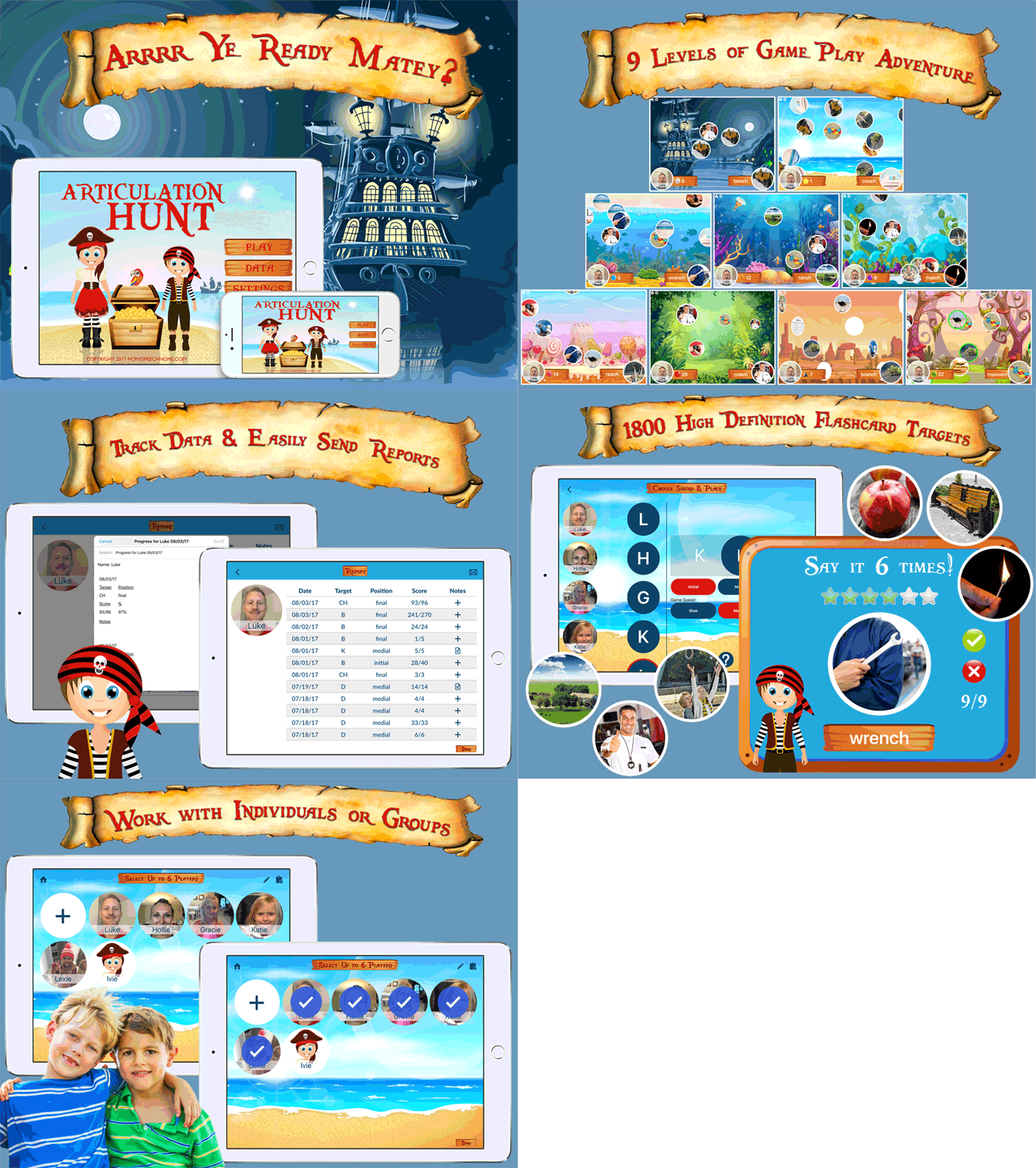
Articulation Therapy + Pirate Adventures = Awesomeness!

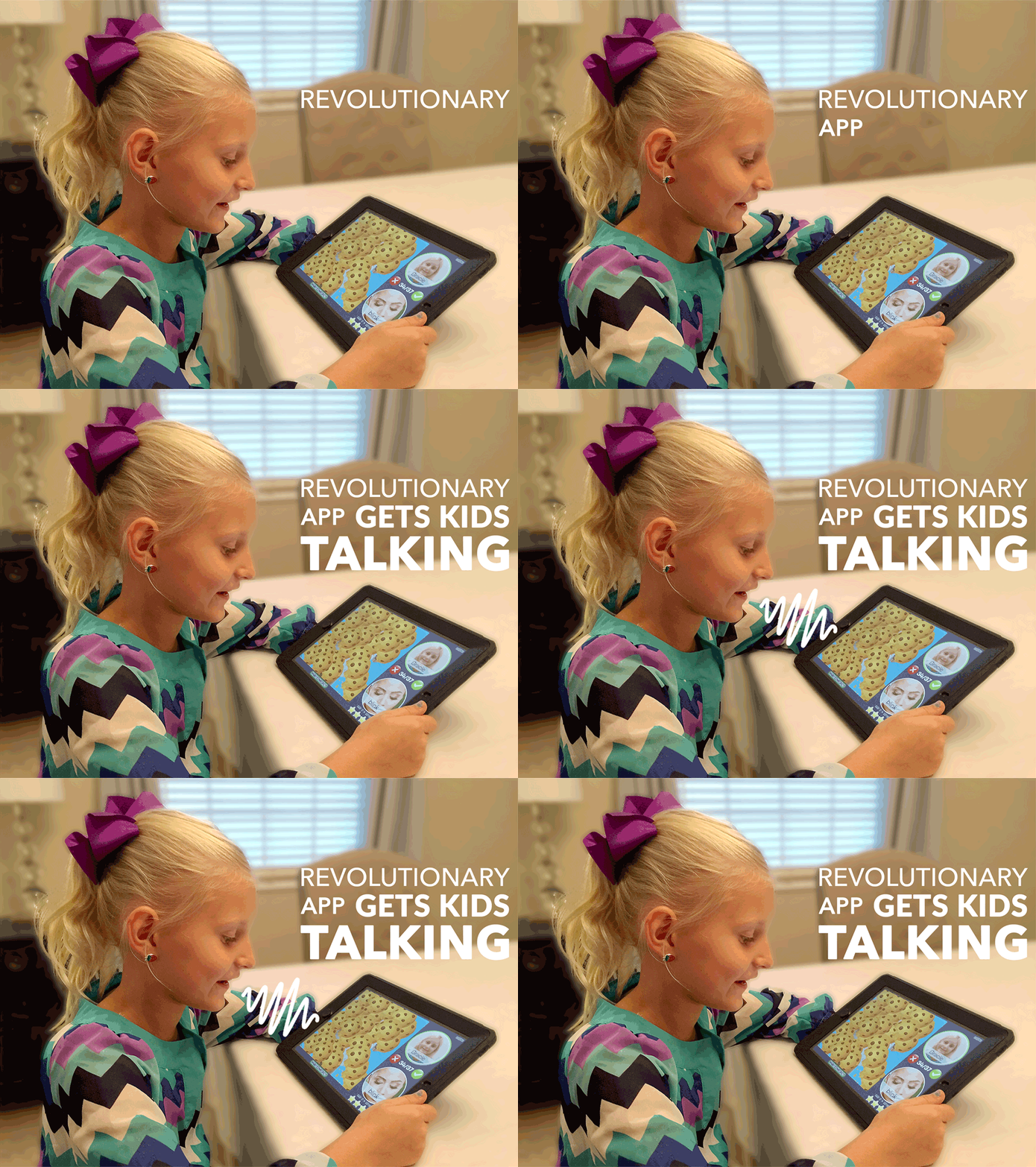
This App Will Get Your Kids Talking





Copyright © 2010 –
HomeSpeechHome.com | All Rights Reserved
This website contains affiliate links, meaning if you buy something from them we may make some money (at no cost to you).
By using our affiliate links, you are helping to support our site which is a U.S.-based, family-run small business :)