Winter Articulation Activities to Keep Speech Sessions Fun and Focused
The air is crisp, the halls are buzzing, and every student seems a little extra wiggly this time of year. Winter brings excitement, but it can also bring distractions — holiday programs, snow days, and post-break energy bursts.
Luckily, winter also brings built-in engagement. Whether it’s snowflakes, mittens, or mugs of hot cocoa, seasonal themes help you capture attention and make speech sessions memorable.
Here are 9 plus bonus low-prep, winter articulation activities to help your students stay focused, laughing, and learning — all while hitting their speech goals.
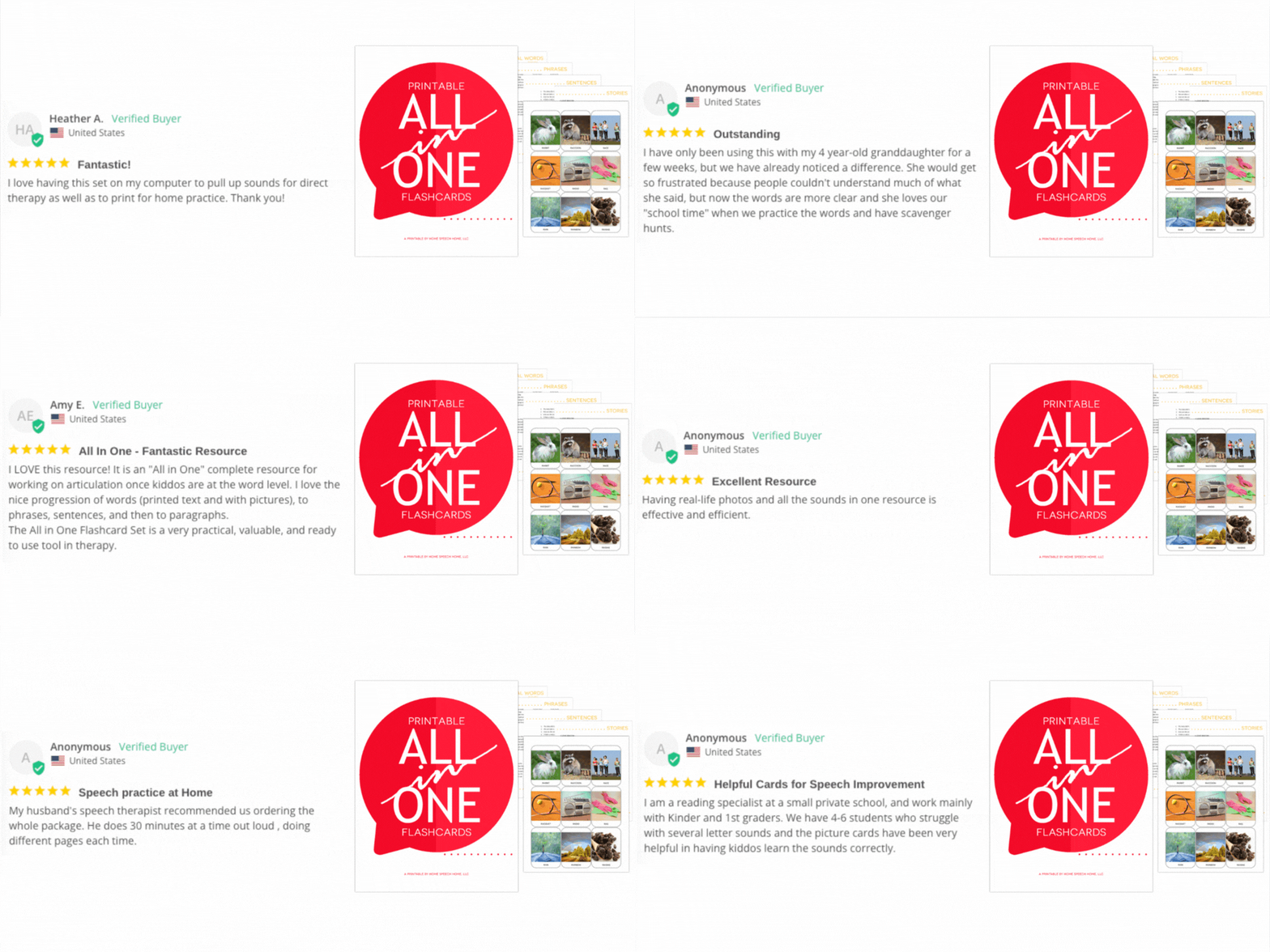
SEE ALSO: Crush Therapy Goals with the All in One Printable Flashcards
1. “Snowball Toss” Articulation Game
Objective:
Increase accuracy of target sounds through repetition and movement.
Materials Needed:
- White paper balls or soft foam “snowballs”
- Buckets or baskets (or the trash can)
- Articulation cards
Steps:
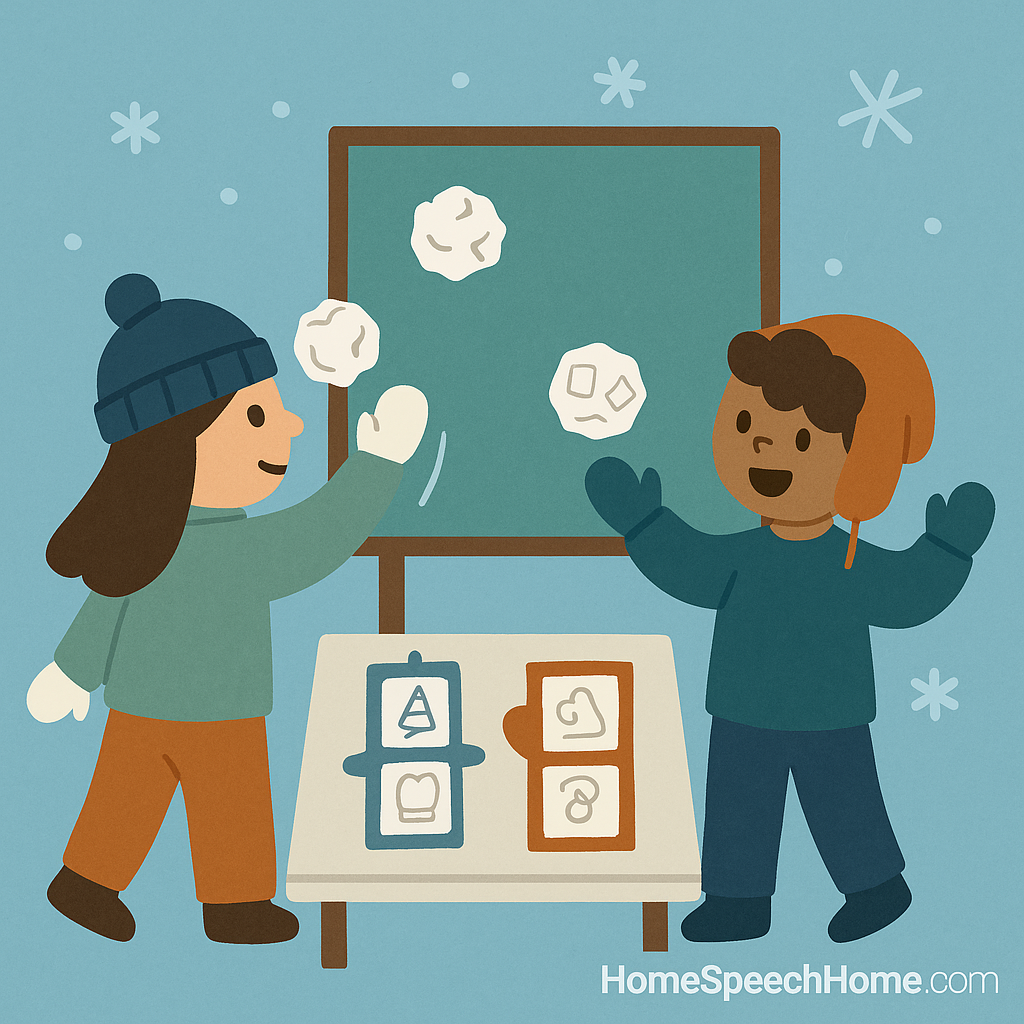
- Write or attach articulation words to each snowball (find targeted words on our word lists).
- Have students toss them into a bucket while saying the target word aloud.
- Each correct production earns one “flake point.”
- Continue until all snowballs are collected, then review 3–5 words in sentences.
Variations:
- For groups: Divide into “teams” (Team /S/, Team /L/).
- For teletherapy: Use digital dice or after students accumulate flake points they get turns playing this snowball throwing game.
- For older students: Add challenge words or tongue-twisters (free download).
Goal Examples:
- Student will produce target sound in words with 80 % accuracy during structured play.
- Student will use target sound in sentences with moderate cues.
2. “Icy Dicey Drill”
Objective:
Increase repetition and engagement through chance-based practice.
Materials Needed:
- Die (1–6)
- Word list with 6 rows (one per die number)(free download)
Steps:
- Roll the die and say the corresponding word or phrase.
- Continue rolling until all words have been practiced, repeat if desired.
- Add a “Freeze Frame” rule — if they roll a 6, they must hold a silly frozen pose.
Variations:
- For older students: Add carryover sentences.
- For teletherapy: Use virtual dice roller.
Goals Examples:
- Student will produce target sound in varied word positions with 90 % accuracy.
- Student will self-monitor and correct during structured drills.
3. “Winter Word Spin”
Objective:
Encourage varied sound practice and self-monitoring.
Materials Needed:
- Spinner labeled: “Say it fast,” “Say it slow,” “Use in sentence,” “Silly voice,” “Whisper” (free download)
- Articulation cards
Steps:
- Student spins and performs the prompt with a word card.
- Provide feedback and visual cues for placement.
- Track correct responses with stickers or snowflake tokens.
Variations:
- For older students: Add “define it” or “use it twice in a story.”
- For teletherapy: Use online spinner (Wheel of Names).
Goals Examples:
- Student will produce target sound in mixed contexts with 90 % accuracy.
- Student will self-correct errors in 4/5 opportunities.
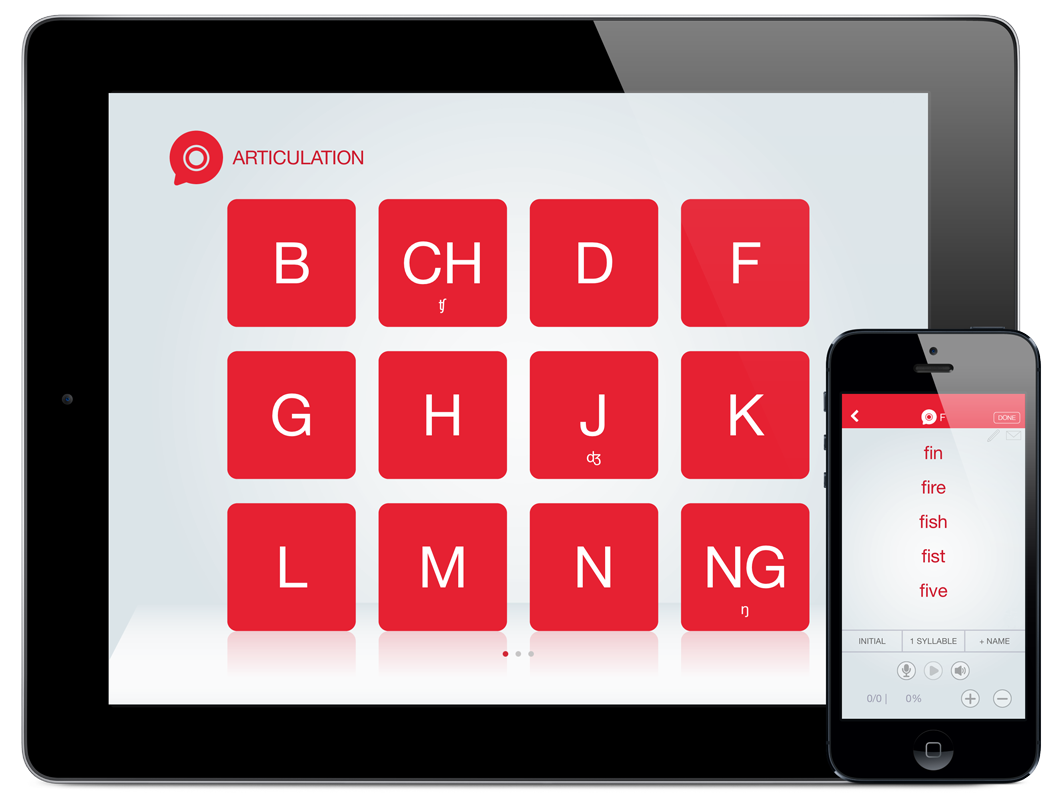
SEE ALSO: The Best Free App for Speech Therapy


4. “Build-A-Snowman Sounds”
Objective:
Promote correct sound production at the word and phrase level through cumulative play.
Materials Needed:
- Snowman template (body parts on separate cards (free download)
- Articulation word list
Steps:
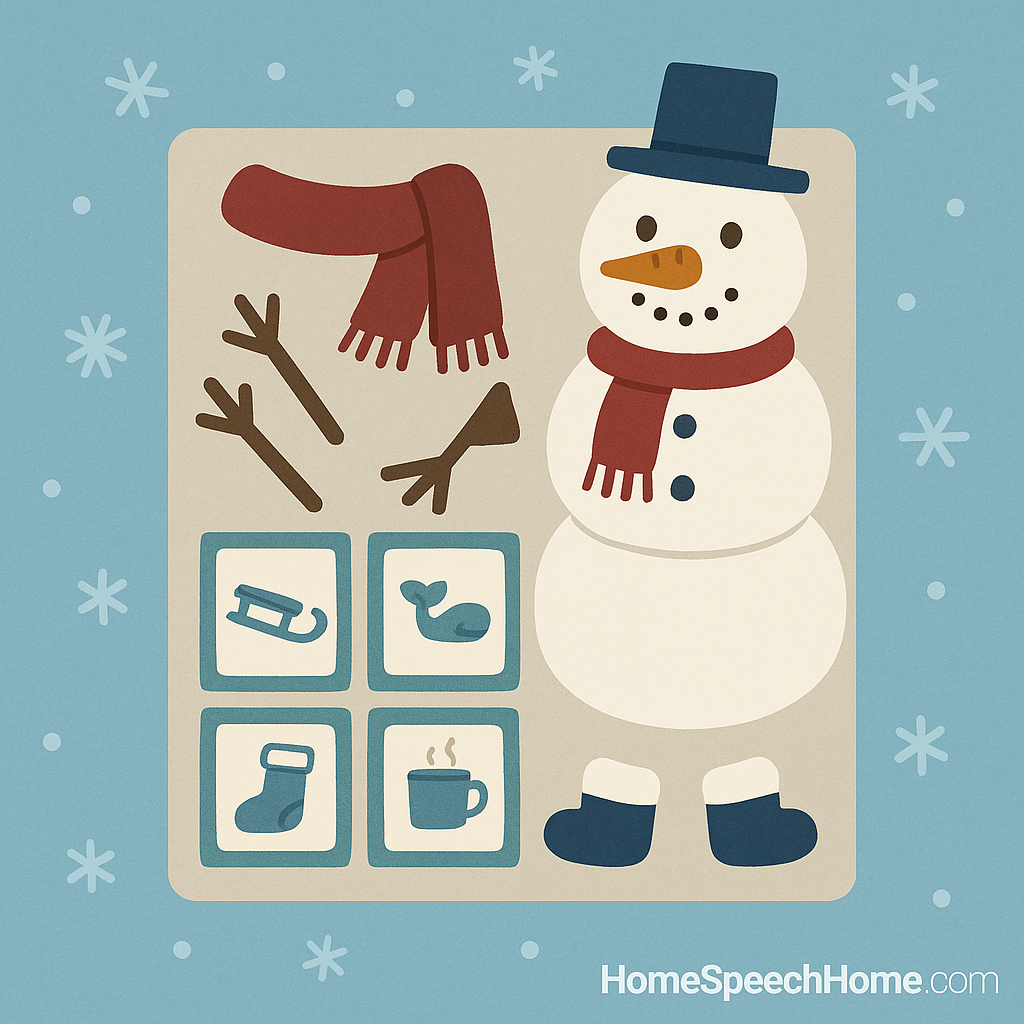
- Each time a student says a word correctly, they earn a snowman piece.
- Continue until their snowman is complete (hat, eyes, scarf, etc.).
- At the end, have them describe their snowman using their target sound.
Variations:
- For mixed groups: Include language goals (color, size, attributes).
- For teletherapy: Use digital drag-and-drop snowman pieces.
Goals Examples:
- Student will produce target sound in words with 90% accuracy in structured tasks.
- Student will describe objects using 2–3 attributes.
5. “Mitten Match-Up”
Objective:
Reinforce sound identification and production with visual pairing.
Materials Needed:
- Cut-out mittens (pairs) (free download) labeled with articulation words
- Clothespins or magnets
Steps:
- Scatter mittens face-down.
- Students find matching pairs and say the words aloud.
- If they pronounce both correctly, they “hang” the mittens on a string or board.
Variations:
- For groups: Create a cooperative “class mitten line.”
- For teletherapy: Use digital matching slides.
Goals Examples:
- Student will correctly produce target sound in words with 80 % accuracy.
- Student will identify target sound position (initial, medial, final).
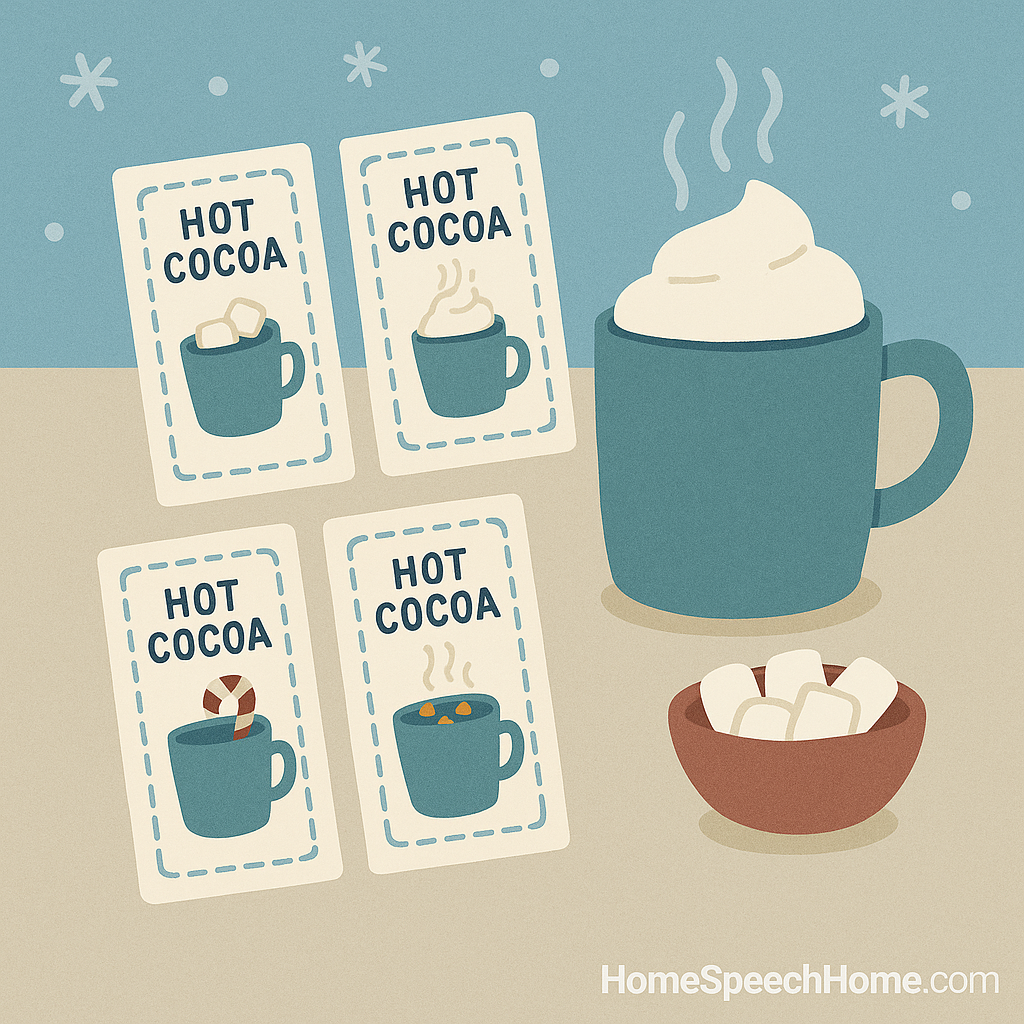
6. “Hot Cocoa Challenge”
Objective:
Encourage repeated practice and sentence production through thematic pretend play.
Materials Needed:
- Paper cups and paper marshmallows (free download)
- Targeted articulation words
Steps:
- Students “order” cocoa by saying words correctly.
- For each correct production, they earn a “marshmallow” in their cup.
- After the round, have them use 3 of their words in a “customer sentence.”
Variations:
- For younger kids: Use picture cards instead of word lists.
- For teletherapy: Display a hot cocoa background (free download) and tally digital marshmallows.
Goals Examples:
- Student will produce target sound in words with 85 % accuracy during structured role-play.
- Student will generalize sound in short connected speech.
7. “Snow Globe Sentences”
Objective:
Encourage creative sentence generation using target sounds.
Materials Needed:
- Blank snow globe templates (free download)
- Articulation word lists
- Crayons or markers
Steps:
- Students draw a winter scene inside their snow globe.
- Write or dictate sentences using 3 target words to describe it.
- Share aloud and provide articulation feedback.
Variations:
- For teletherapy: Use digital snow globe graphic organizers.
- For mixed groups: Include language goals (describe, compare).
Goals Examples:
- Student will use target sound in structured sentences with 85 % accuracy.
- Student will combine articulation and expressive language.
You might also like:



8. “Frozen Phoneme Race”
Objective:
Improve accuracy and speed of sound production through quick-paced repetition.
Materials Needed:
- Articulation cards
- Timer
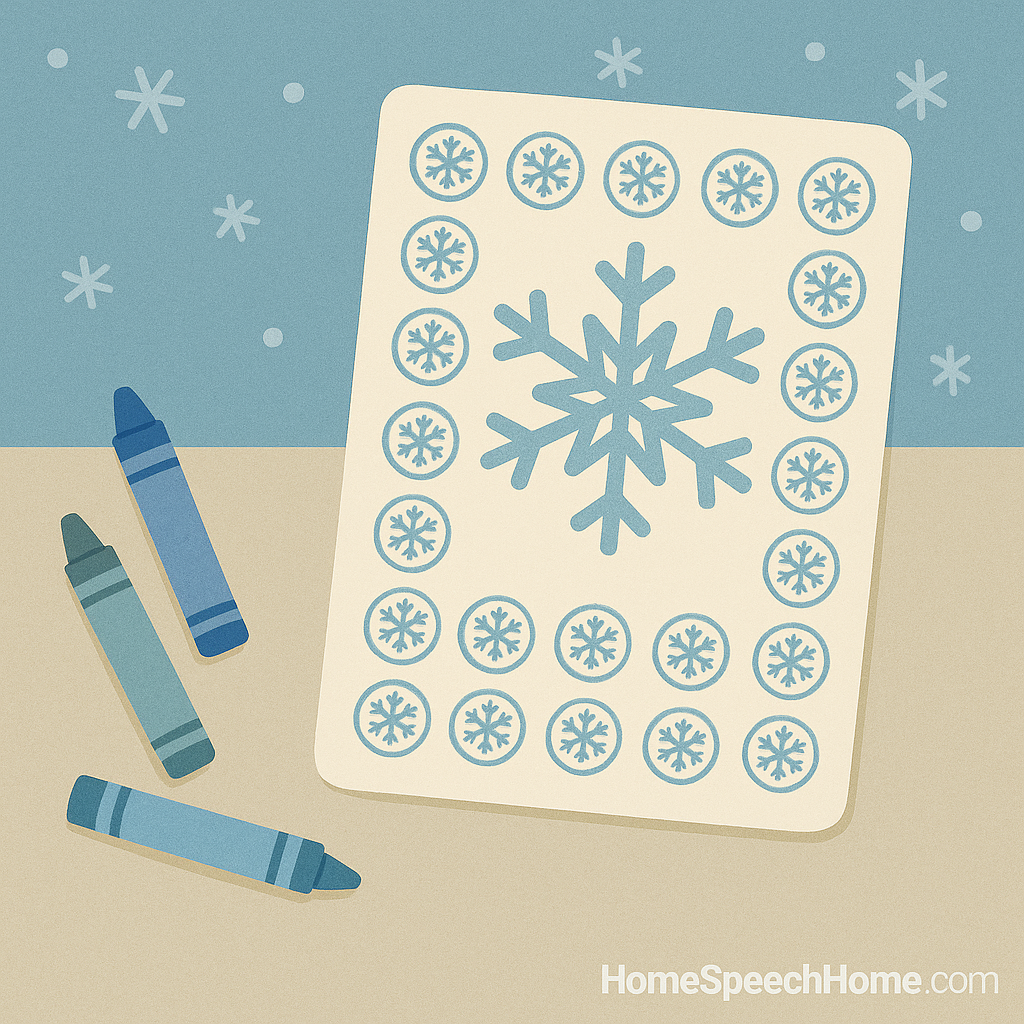
- “Frozen Phoneme” tracking sheet (free download)
Steps:
- Choose a target sound and set a timer for 30 seconds.
- Students say as many correct words as they can before time’s up.
- Record totals by marking the snowflakes in whatever way the student wants and then repeat to try to beat their score.
Variations:
- For groups: Create a relay race format.
- For teletherapy: Use an online timer and screen-shared word lists.
Goals Examples:
- Student will produce target sound in isolation/words with 90 % accuracy in timed tasks.
- Student will demonstrate improved automaticity across trials.


9. “Blizzard Story Builders”
Objective:
Promote generalization of target sounds into narratives.
Materials Needed:
- Winter based story prompt cards (free download)
- Articulation word list
Steps:
- Give students 3 words containing their sound.
- Place all the story prompt cards upside down.
- Have the student draw a story prompt card
- Create a mini “blizzard story” using all 3 words.
- Record or retell for review.
Variations:
- For younger kids: Provide picture prompts.
- For older students: Add a written retell or peer feedback.
Goals Examples:
- Student will use target sound in connected speech with 80% accuracy.
- Student will organize a narrative with beginning, middle, and end.
Bonus: “Speech Snowflake Challenge”
Objective:
Encourage home practice and self-tracking.
Materials Needed:
- Printable snowflake chart (free download)
- Stickers or stamps
Steps:
- Send home a chart with 9 speech words per snowflake.
- Students color a section after completing each practice set.
- Review at next session and celebrate progress.
Variations:
- Add bonus tasks: “Say your words before brushing teeth.”
- Reward full completion with extra game time.
Goals Examples:
- Student will complete 5 minutes of home practice 4 days/week.
- Student will demonstrate generalization across environments.
When the temperature drops, your therapy room can still feel bright and active. Whether you’re tossing paper snowballs or spinning silly “frozen” sentences, your students will stay motivated while meeting measurable goals.
Winter can be magical — especially when progress keeps snowballing.
“Want ready-to-use word lists for every sound? Check out HomeSpeechHome's Articulation Flashcards, organized by phoneme for quick grab-and-go therapy.”

Speech Therapy Activities & Special Deals, Oh My!
Sign up for Terrific Therapy Emails
Your information is 100% private & never shared.
- Homepage
- Speech Therapy Activities
- Winter Articulation Activities

Hi! We're Luke and Hollie.
We are both MS CCC-SLPs and fell in love while studying for our degrees. Since then we have done everything together - graduated, worked, and started a family. We spend most of our time with our family and the rest making this site for you.

Top Free
Resources




Free Apps
Word Vault Essential

# 1 Chronological Age Calculator
Popular Materials
All in One Printable Flashcards
Multiple Meaning Word Mega Pack
Complete Articulation Word Search
New! 111 Articulation Stories
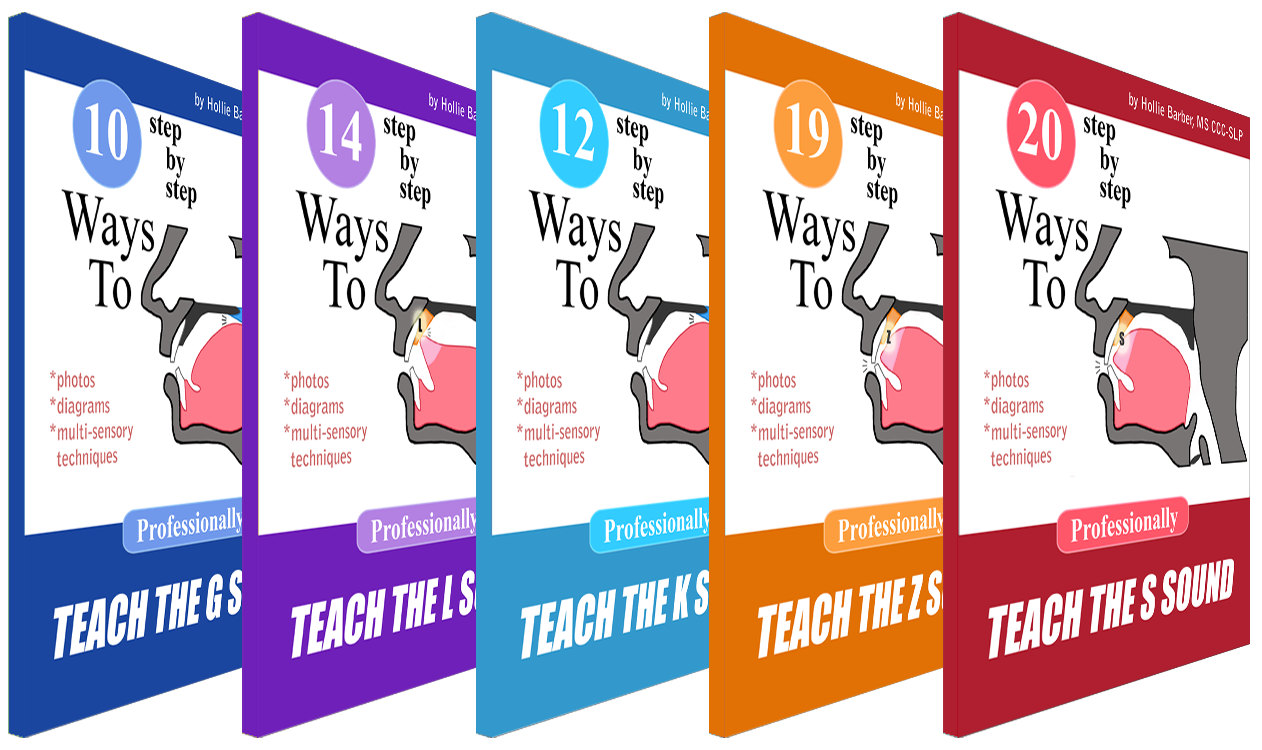
Teaching the Sound Books
Multi-Syllabic Words Flashcards
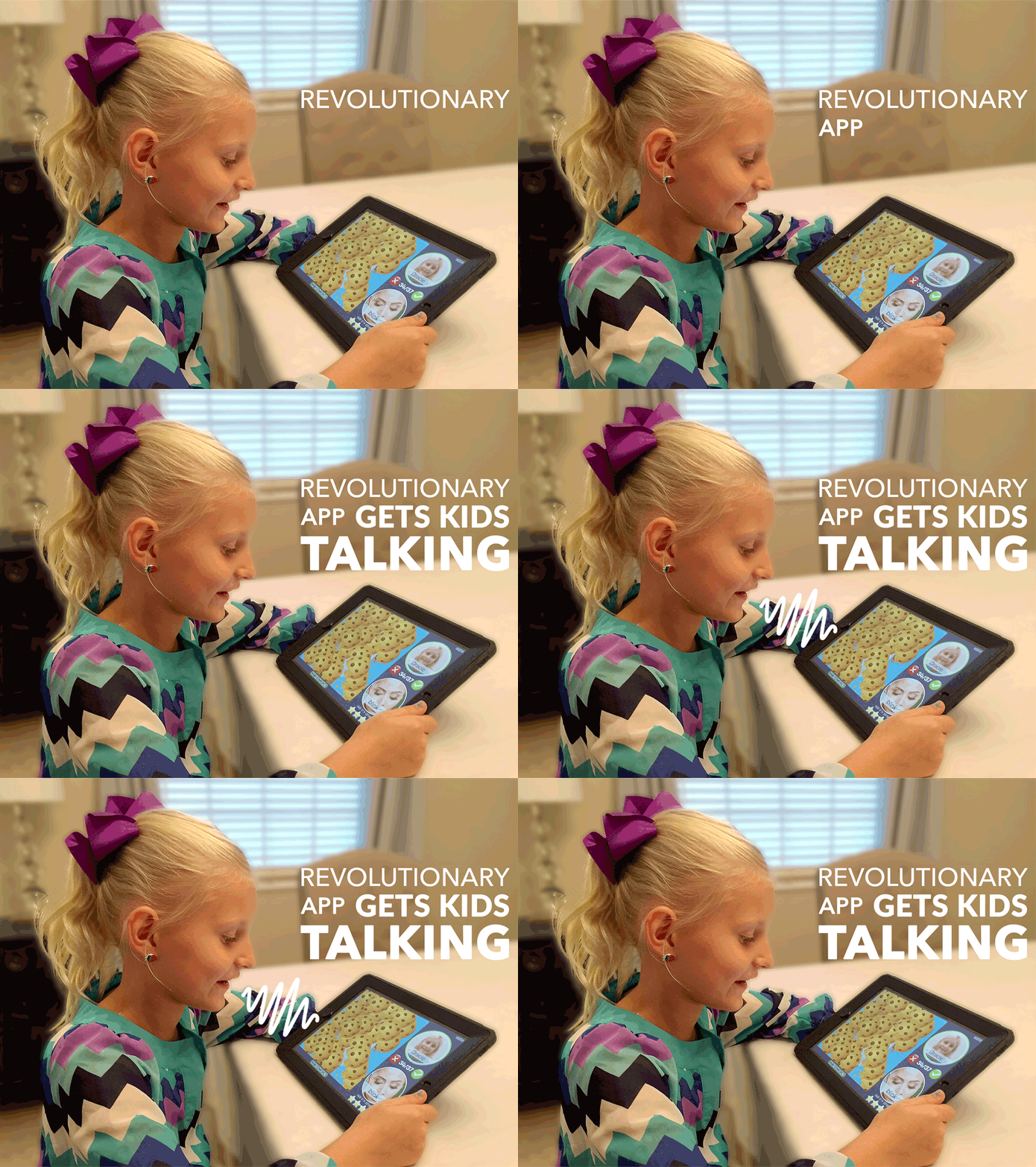
Apps to Save You Time
& Help Your Clients
Articulation Therapy + Pirate Adventures = Awesomeness!


This App Will Get Your Kids Talking



Your information is 100% private & never shared.
Copyright © 2010 –
HomeSpeechHome.com | All Rights Reserved

This website contains affiliate links, meaning if you buy something from them we may make some money (at no cost to you).
By using our affiliate links, you are helping to support our site which is a U.S.-based, family-run small business :)